Skip the intro · jump to the list ↓
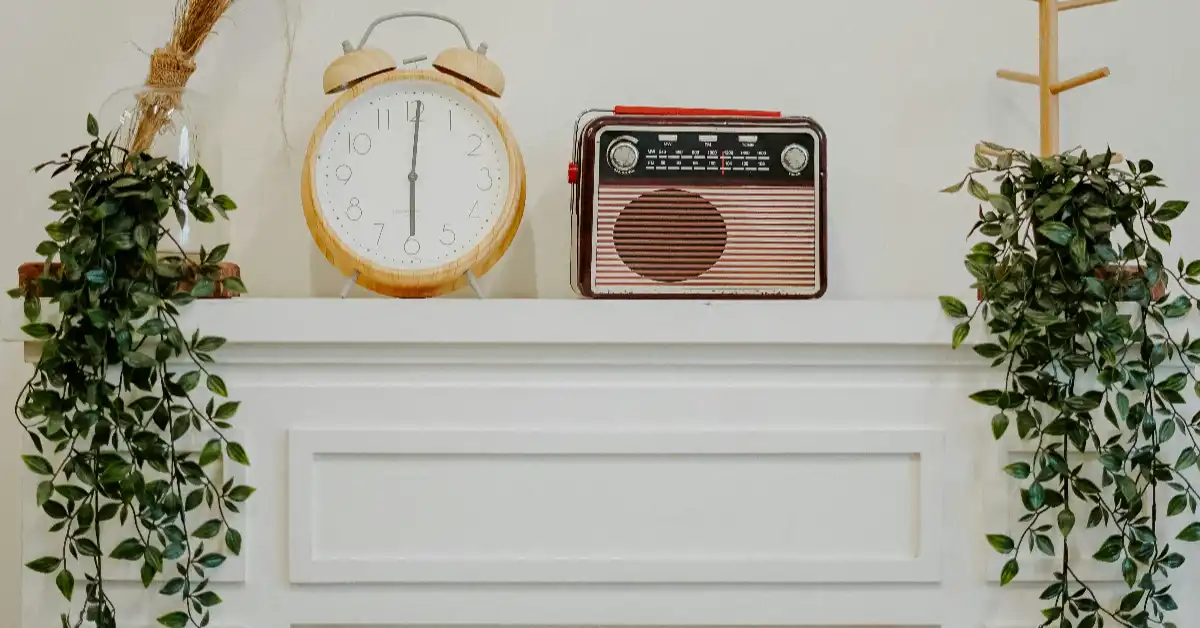
Mantel styling has taken over my late nights lately and I’m not even a little sorry about it. Your fireplace mantel is the focal point of the living room and getting it right genuinely changes how the whole space feels – whether you just moved in or you’ve been avoiding looking at your bare mantel for two years because you couldn’t figure out what to do with it. No judgment, I was there too.
These are the ideas I keep coming back to, from sleek and minimal to cozy and layered. Something in here will be right for your space.
1. Chic Modern Mantel Decor
A large abstract art print paired with a single sculptural vase – this is the modern mantel approach that looks intentional rather than assembled from whatever was lying around. Clean lines, muted tones, enough negative space that each piece actually gets to be seen. The whole thing reads as gallery-worthy without requiring much.
A low geometric candle holder in black or brushed gold is the finishing detail that grounds it. One thing at different heights doing different things, and that’s genuinely it. Sometimes the simple version is the right version.
2. Timeless Minimalist Mantel Ideas
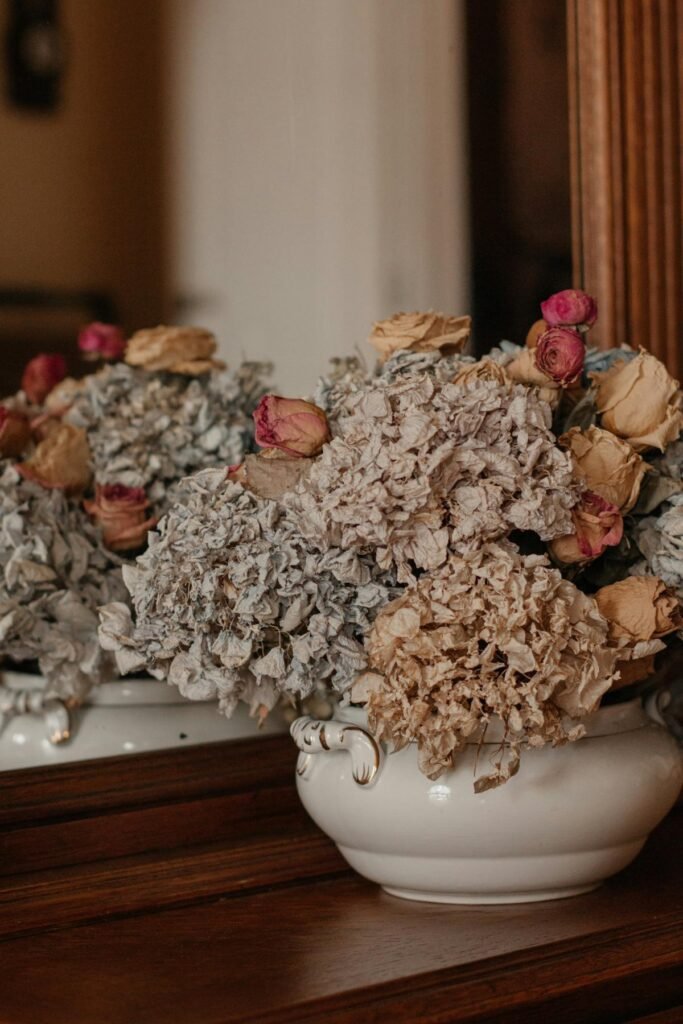
Two or three carefully chosen objects is all a minimalist mantel needs. A single ceramic bowl, one tall taper candle, maybe a tiny potted plant – and then you stop. The breathing room between the pieces is what makes each one feel worth looking at rather than lost in a crowd of other things.
This is the approach that’s hardest to execute because the instinct is always to add more. Resist it. A minimalist mantel done well has a calm to it that a busier arrangement can’t replicate, and that calm is genuinely felt by everyone who sits in the room.
Photo by Angela Roma on Pexels
3. Warm Farmhouse Mantel Accents
Vintage wooden frames stacked alongside a chunky knit garland – this is the farmhouse mantel combination that makes a living room feel like somewhere you’d actually want to spend an entire afternoon. The warm textures and earthy tones do something to a room that cooler palettes just can’t achieve in the same way.
Dried cotton stems or a small lantern tucked in at the end finishes it without overcomplicating what’s already a warmth-based concept. The goal here isn’t precision – it’s that slightly gathered, slightly imperfect quality that reads as genuinely lived in rather than arranged for a photograph.
Photo by Max Vakhtbovych on Pexels
4. Seasonal Decor Transformations
Swapping the mantel with the seasons is the ritual I started last fall and now genuinely look forward to more than I expected to. Guests comment on it every time they visit – not because it’s elaborate but because it signals that someone pays attention to the space, that it changes and responds to the time of year.
Pumpkins and leaves in autumn, pine branches and candles in winter, fresh florals in spring – each version is different but they share the same quality of feeling current and appropriate. The mantel that stays the same year-round eventually just becomes invisible. The one that changes stays interesting.
5. Elegant Mantel Styling Tips
A tall ornate mirror above the mantel flanked by matching candlesticks is the formal living room approach that consistently looks like it belongs in a magazine without requiring much beyond the right objects. The symmetry does the heavy lifting – it creates a sense of order and intention that more casual arrangements sometimes lack.
A few fresh white roses or a trailing ivy plant is the final touch that softens what could otherwise read as too stiff. Elegance and warmth together is the combination worth aiming for, and those two small organic elements are often what gets you there.
Photo by Alexander Mass on Pexels
6. Neutral Mantel Color Schemes
I completely underestimated neutral mantel decor until I redid my own living room last spring and suddenly everything I’d been fighting against – all the decisions about what goes with what – just went away. Creamy whites, soft taupes, warm greiges – they work with literally everything around them and they age well rather than feeling dated.
A simple linen runner and a few matte ceramic vases and the whole thing looks quietly considered in a way that more colorful arrangements sometimes don’t. Neutral is not boring when the objects themselves have good form and texture. That’s really the whole secret.
Photo by Alexander Mass on Pexels
7. Natural Elements in Decor
I visited my aunt’s cabin a few years ago and stood in front of her mantel for probably too long – raw wood slices, smooth river stones, a little bundle of dried lavender – and I remember thinking this is the version I want. Natural materials like reclaimed wood and rough-cut stone add a warmth and earthiness that manufactured objects simply don’t have.
The quality that makes it work is the same quality that makes it feel lived-in rather than staged – these are materials that exist in the world outside and bringing them inside creates a continuity between the two that feels genuinely settled. A woven basket or two alongside and the whole thing is complete.
Photo by Jessica Johnston on Unsplash
8. Artistic Display Techniques
Leaning a large framed print or oversized canvas against the wall above the mantel rather than hanging it is the move that makes a display feel relaxed and intentional at the same time – slightly casual, but clearly deliberate. Layering smaller framed pieces in front of a bigger one creates a gallery-adjacent effect without putting a single nail in the wall, which is the version I default to when I don’t want to commit to something.
Mixing black frames with natural wood ones creates the contrast that catches your eye when you walk into the room. The slight tension between the two frame styles is what makes the arrangement feel considered rather than just placed. Play around with the arrangement a few times before you settle – moving things costs nothing.
Photo by Katya Wolf on Pexels
9. Layering Textures for Depth
I spent two hours one Saturday rearranging my mantel and the thing that finally made it look right was the textures. A chunky knit throw draped over the corner, a smooth marble tray, a rough concrete candleholder – when I stepped back and looked at the three of them together the whole arrangement suddenly had depth in a way it hadn’t before.
Mixing matte, glossy, woven, and rough surfaces is the technique that gives a mantel that pulled-together richness you see in the best styled spaces. It’s not complicated once you understand what you’re looking for – just grab a few objects with completely different finishes and let the contrast do the work. The objects don’t even need to be that interesting individually.
10. Incorporating Greenery and Plants
One good plant on a mantel does more than most people expect. A trailing pothos, a eucalyptus bundle, even a single stem in a bud vase – the greenery adds organic softness that makes the whole arrangement feel alive rather than static. It’s especially valuable on a minimalist mantel where everything else is restrained and the plant becomes the thing that makes it feel inhabited.
My personal approach is a small trailing vine on one side and a cluster of dried pampas grass on the other – asymmetrical, different textures, different colors. It’s the version that keeps looking right without me touching it, which is the mark of an arrangement that actually works.
11. Candles for a Cozy Ambiance
Clustered candles in varying heights is the mantel change that most noticeably affects how a room feels in the evening. I lit a bunch of mismatched pillar candles on my mantel last winter and the whole living room shifted into something that felt genuinely warm and intimate rather than just lit – like a different room entirely after dark.
Mix beeswax, soy, and taper styles so you have different heights and different surface textures all going at once. The visual difference between five candles of the same height and five candles at different heights is significant and worth the extra thirty seconds of arrangement thought.
Photo by Valeria Boltneva on Pexels
12. Seasonal Themes and Colors
Deep burgundy and burnt orange in fall, soft whites and pine sprigs in winter – swapping the mantel’s color palette with the season is one of the cheapest and most effective room refreshes you can do. New furniture is expensive and rarely necessary. A few seasonal objects on the mantel changes the feeling of the room completely without touching anything else.
The other thing it does is keep you looking at the mantel rather than stopping seeing it, which is what happens to every piece of decor eventually. Change it a few times a year and it never becomes invisible.
Photo by Elina Volkova on Pexels
13. Mirrors for Illusion and Light
A large vintage mirror leaned against the wall above the mantel is the single change that most visibly expands a room – the reflection bounces natural light around in a way that makes the whole space feel twice as big and significantly brighter than it actually is. The effect is more dramatic than people expect until they try it.
An ornate gold frame feels formal and elegant. A simple arch mirror reads as more contemporary and works in almost any room. Either way, the mirror does more functional work than almost any other mantel object – it’s not just decor, it’s changing the light in the room.
Photo by Max Vakhtbovych on Pexels
14. Personal Touch with Family Photos
Mismatched frames with family photos is the mantel approach that makes a room feel like it belongs to specific people rather than just being well-decorated. My grandma always had photos on her mantel and walking into that room felt like a particular kind of welcome that had nothing to do with the furniture and everything to do with the faces on the wall.
Black-and-white prints mixed with color snapshots, frames at different heights, nothing perfectly aligned – this version looks collected over time because it was. That’s genuinely hard to replicate with purchased objects and easy to achieve when you’re using real photographs of real people.
Photo by Neda Kekil on Pexels
15. Vases and Floral Arrangements
Tall ceramic vases with fresh or dried florals are the mantel addition that photographs well but more importantly looks good in real life every day without requiring much maintenance. Dried pampas grass and eucalyptus don’t need water and they hold their shape for months. Grocery store tulips in a simple vase are genuinely as good as anything expensive when the light hits them right.
Group odd numbers of vases together – three always reads better than two, four better than three, and so on. Even numbers create a symmetry that feels static. Odd numbers have a dynamic quality that keeps the eye moving across the arrangement.
Photo by Alina Bondar on Unsplash
16. Using Books as Decor Elements
A few coffee table books stacked on the mantel is the decor move that makes a space feel inhabited in a specific intellectual way – like someone actually lives here and has actual interests, which is a quality that no purely decorative object can fully replicate. I did this last winter and it changed how the whole mantel read.
Spine-out stacking in neutral tones is the cleaner approach – the books become part of the composition rather than drawing attention to their titles. Or lean one open against the wall with an interesting image showing if you want something more personal. Either version works.
17. Hanging Art Above the Mantel
An oversized canvas or a bold statement print above the fireplace does two things at once – it adds vertical height that draws the eye upward and it gives the mantel objects something to relate to rather than just floating in space. The art and the mantel work as a system rather than as separate decisions.
When the colors in the art above echo the tones in the objects below, the whole wall reads as composed. When they’re unrelated, both things look slightly wrong even if each one is good on its own. Getting that relationship right is usually the difference between a mantel that looks finished and one that looks like it’s still waiting for something.
Photo by Franco Debartolo on Unsplash
18. Lighting Fixtures for Ambiance
Wall sconces on either side of the mantel or a small pendant above it are the lighting additions that change how the whole wall reads at night. Seasonal mantel arrangements specifically look significantly better with dedicated lighting rather than relying on the room’s general overhead light – the warmth and directionality of wall sconces does something to a mantel display that ceiling light just doesn’t.
It’s one of those changes where you do it and then genuinely can’t remember why you didn’t do it sooner. The investment is small and the effect on evening ambiance is substantial.
Photo by SUHER DAA on Unsplash
19. Functional Decor with Storage
Pretty baskets or decorative boxes tucked into a mantel arrangement solve the storage problem while contributing to the aesthetic rather than just tolerating it. The basket has texture, the box has presence – they’re doing decor work while also holding things you don’t want sitting out, which is the best possible outcome for any object in a room.
This works especially well in farmhouse and neutral mantel schemes where natural materials are already part of the language. A woven basket that holds remotes or matches or whatever you’re managing doesn’t look like storage in that context. It just looks like it belongs there, which is exactly where you want to end up.
Photo by Genevieve Rusnac on Unsplash
Just a little note - some of the links on here may be affiliate links, which means I might earn a small commission if you decide to shop through them (at no extra cost to you!). I only post content which I'm truly enthusiastic about and would suggest to others.
And as you know, I seriously love seeing your takes on the looks and ideas on here - that means the world to me! If you recreate something, please share it here in the comments or feel free to send me a pic. I'm always excited to meet y'all! ✨🤍
Xoxo Clara