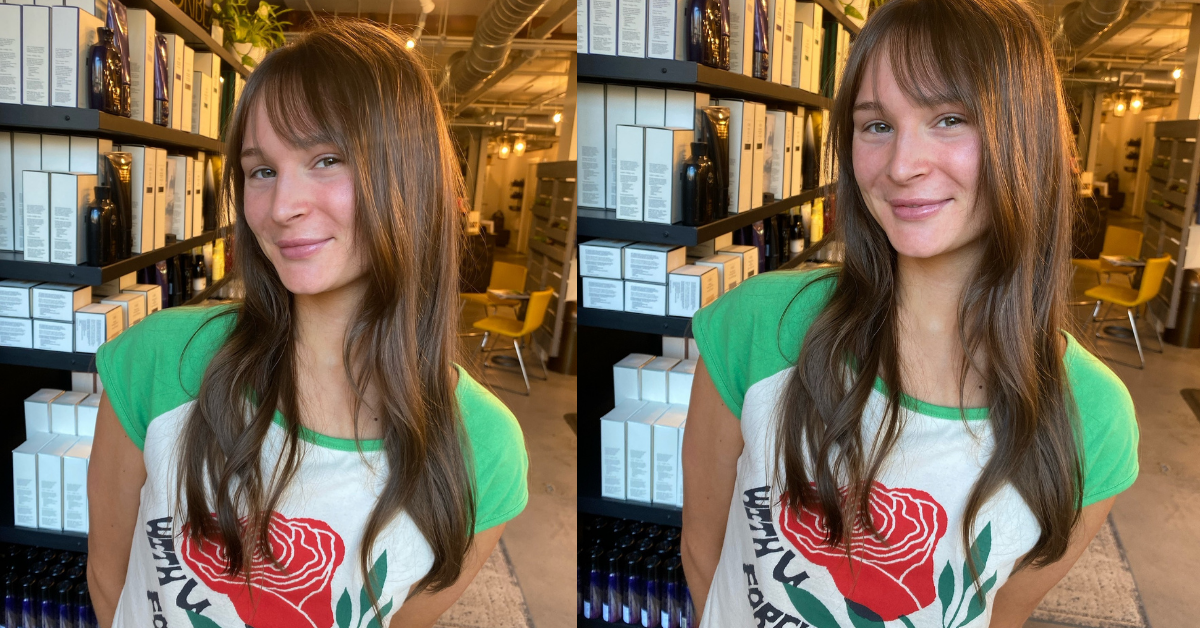
I am talking about the universal, undeniable, absolutely overwhelming feminine urge to cut a fringe. It happens to the best of us. You are just sitting on your couch on a random Tuesday in March, minding your own business. Suddenly you see one picture of a girl looking effortlessly cool on Pinterest. And boom. You are convinced that a block of hair on your forehead is going to completely fix your entire life. It is a dangerous game, honestly.
I know this because me and my sister literally just went through this exact crisis last weekend. We were getting ready for a big family gathering. I was looking in the mirror and I just felt so bored with my hair. I actually picked up the kitchen scissors. My sister had to physically take them out of my hand and tell me to step away from the mirror. It was a close call. But it got me thinking. If we are going to do this, we need to do it right. We cannot just be hacking away at our own hair at 2 AM anymore.
There are basically two massive trends right now when it comes to bangs. You have the Soft Fringe, and you have the Statement Fringe. They give off two completely different energies. And choosing the wrong one for your lifestyle is a fast track to regret. So, I have put together my absolute full guide for you.
The “I Just Woke Up Like This” Soft Fringe
Okay, let’s start with the safer option. The Soft Fringe. You might also hear people call this a wispy fringe, curtain bangs, or a bottleneck fringe. This is the look that is everywhere right now. It is that very soft, piecey, textured hair that just sort of gently falls around your eyes and cheekbones.
It is giving very much “I am a cool, creative person who just rolled out of bed and naturally looks this amazing.” It is not a heavy, solid block of hair. You can still see your forehead peeking through. The edges are usually blended perfectly into the rest of your hair so there is no harsh line.
I actually tried this look two years ago. I was so scared of commitment, so I asked my stylist for the absolute thinnest, wimpiest little fringe ever. It actually turned out amazing. Because it is so soft, it is incredibly forgiving. If I was having a bad hair day, I could literally just sweep it to the side and blend it into my regular layers. It is the ultimate low-commitment hair change.
Who is this for?
- The Low-Maintenance Girlies: If you hate spending more than ten minutes on your hair in the morning, this is your winner.
- Fine Hair: If your hair is on the thinner side, a soft fringe adds movement and texture without taking too much density away from the rest of your hair.
- First-Timers: If you have never had bangs before, do not jump straight into a heavy blunt cut. Start here. It is so much easier to grow out.
The Reality of Styling:
Here is the secret to the soft fringe. You need a velcro roller. Throw your curling iron away. Well, don’t throw it away, but you don’t need it for this. When your hair is like 90 percent dry, you just take that front section of hair, roll it forward and under with a medium-sized velcro roller, and hit it with the blow dryer for a few seconds. Let it cool down while you do your makeup. When you take it out, you have that perfect, bouncy, swoopy shape. It takes two seconds and looks like a salon blowout.
The “Main Character Energy” Statement Fringe
Now, let’s talk about the heavy hitter. The Statement Fringe. This is not for the faint of heart. This is the bold, thick, blunt cut that goes straight across your forehead. It can be a micro-fringe that sits way above your eyebrows, or a heavy block that grazes your eyelashes. But either way, it is a massive look.
When you walk into a room with a statement fringe, people notice. It screams confidence. It makes every single outfit you wear look high-fashion. You could literally be wearing old sweatpants and a stained t-shirt, but if you have a sharp, heavy fringe? You just look like an off-duty model.
I have a really funny story about this. A few years back, I was getting ready for a huge community event. Lots of dancing, lots of family around. I decided to be super brave and get a really heavy, blunt statement fringe cut right above my eyebrows. I felt so incredibly cool. I paired it with some massive beaded earrings my auntie made for me. I was feeling myself.
But then, we went outside. Guys, I did not factor in the weather. A massive gust of wind came through the grounds. Because my fringe was so thick and straight, the wind completely lifted it up and it just stuck straight out off my forehead like a little awning. I looked absolutely ridiculous. I had to spend the rest of the day holding my hand flat against my forehead whenever a breeze came by. It was a humbling experience, to say the least.
Who is this for?
- Thick Hair: You need a lot of hair density to pull this off properly. If your hair is very fine, a statement fringe will look stringy instead of bold.
- The Bold Personality: You have to own this look. It completely changes your face shape and draws all the attention straight to your eyes.
- The Dedicated Styler: You cannot just air-dry a statement fringe. It requires heat styling every single day. Period.
The Ultimate Maintenance Reality Check
Okay, we need to have some real talk about the upkeep. Because this is the part people never think about when they are holding the scissors in their bathroom.
A soft fringe is pretty chill. You can probably get away with trimming it every six to eight weeks. And when it grows out, it just turns into face-framing layers. It is a very graceful exit.
But a statement fringe? That is a part-time job. Your hair grows faster than you think. A blunt cut needs to be trimmed every three to four weeks if you want it to keep its shape. If it gets even a millimeter too long, it will start poking you in the eyes and you will go insane. You have to commit to regular salon visits. Please, do not try to trim a blunt fringe yourself. It never ends perfectly straight. Trust me on this.
And let’s talk about grease. Because your hair is literally sitting flat against your forehead all day, absorbing all your skincare and sweat, your fringe is going to get oily so much faster than the rest of your head.
My absolute best tip for this? You need a good powder dry shampoo. Not the aerosol spray kind, the actual loose powder. I take a big fluffy makeup brush, dip it in the dry shampoo powder, and lightly dust it under my fringe right at the root. It soaks up all the oil without making the hair look stiff or white. Also, sometimes I literally just wash my fringe in the sink with a tiny drop of shampoo while the rest of my hair is tied back. It is a lifesaver on busy mornings.
How to Talk to Your Stylist (So You Don’t Cry Later)
This is probably the most important part of this whole guide. How many times have we walked out of a salon holding back tears because the stylist just didn’t get what we wanted? We have to communicate better.
First of all, you have to bring photos. But you have to bring realistic photos. If you have stick-straight, fine hair, do not bring a picture of a girl with massive, thick, curly hair and say “I want this.” It is just not going to happen. Find pictures of people who have a similar hair texture and face shape to you.
When you sit in the chair, be super specific about where you want the fringe to hit. Say things like, “I want the shortest part to hit right below my eyebrow,” or “I want it to touch the top of my cheekbones.” Use your fingers to point exactly to the spot on your face.
If you are going for the soft fringe, tell them you want the edges “shattered” or “point-cut.” That means they use the scissors vertically to create softness, instead of cutting straight across. If you want a statement fringe, tell them you want a strong, blunt baseline.
Just a little note - some of the links on here may be affiliate links, which means I might earn a small commission if you decide to shop through them (at no extra cost to you!). I only post content which I'm truly enthusiastic about and would suggest to others.
And as you know, I seriously love seeing your takes on the looks and ideas on here - that means the world to me! If you recreate something, please share it here in the comments or feel free to send me a pic. I'm always excited to meet y'all! ✨🤍
Xoxo Clara