


This list is for anyone new to sourdough who just realized their starter needs a personality. Beginners, renters with one tiny counter, busy people who feed a jar between meetings; this one’s for all of you!
There are hundreds of pins out there for starter names, feeding charts, banneton tips and bread scoring designs. Only the ones that actually work in a real kitchen made the cut here.
Everything below is organized the way you’d actually use it. Naming and feeding ideas come first, then gifting, then the pretty scoring designs, then banneton basics for the beginners still figuring out proofing baskets.
Some of these are pure fun. Others are practical enough to save you a ruined loaf.
Is a named starter really necessary? Not necessary, no. But is it fun? Absolutely, lol!
Scroll through, pick what fits your kitchen and your patience level. Get baking.
SOURDOUGH STARTER NAMES IDEAS
Naming Jar Label Ideas

Coming up with these is half the fun of getting into bread baking. A jar with a name feels less like science and more like a pet you occasionally forget to feed, haha!
Chalkboard labels work great since you can wipe off old dates and rewrite them each week. Try something food-adjacent like Doughy Parton or Loaf Actually; the puns basically write themselves.
- Naming makes feeding stick
- Chalkboard jar labels wipe clean
- Puns encouraged, groans expected
- Works for any size jar
Weekly Starter Feeding Printable

A printable feeding schedule saves a starter from getting neglected on a busy week. Print one out and stick it right on the fridge where you’ll actually see it.
This is where a solid starter feeding schedule ideas chart earns its keep, since guessing at ratios gets old fast. Track the date, the ratio and how much it rose so patterns show up over time.
Checkboxes make it satisfying too. Who doesn’t love crossing something off, am I right?
- The fridge chart that fixes forgetfulness
- Free printable download
- Fits on a single fridge magnet
- Tracks rise over weeks
Fridge Feeding Routine Guide

Not everyone bakes every single day. That’s completely fine. A fridge routine lets the starter rest between bakes without dying on you.
Feed it once, let it sit an hour on the counter, then tuck it into the fridge for the week. Pull it out a day before baking and give it two feedings to wake back up.
This is the routine for anyone who bakes on weekends only. No shame in that.
Sourdough Starter Gift Jar
Giving away a starter is one of the sweetest sourdough gift ideas out there. It costs almost nothing. Scoop some into a clean jar, tie on a ribbon and add a tiny card with feeding notes.
Include a nickname suggestion on the tag too, since a starter without a name just feels incomplete.
- The gift that keeps rising
- Costs basically nothing to make
- Includes a handwritten care card
- Great for new bakers
Bread Baking Gift Basket

A full gift basket takes the starter jar idea up a notch. Pair the jar with a bench scraper, a lame for scoring and a little bag of bread flour.
Add a lined proofing basket if the budget allows. That combo covers basically everything a beginner needs to bake their first loaf without panicking.
- Everything a new baker needs
- Bench scraper included
- Small bag of bread flour
- Fits in one gift box
Leaf Pattern Bread Scoring

Leaf patterns on a loaf top look fancy but the technique is fairly forgiving. A single central vein cut plus smaller angled slashes creates the whole leaf shape as it bakes open.
This is one of those bread scoring ideas that photographs beautifully with almost no practice. The dough does most of the work once it’s in the oven.
- The pattern that looks harder than it is
- One central cut, angled sides
- Works on round or oval loaves
- Bakes open into full leaves
Wheat Stalk Scoring Design

Wheat stalk scoring is the design that makes people think you took a class somewhere. It’s really just a center line with short diagonal cuts branching off, like a fishbone.
Score it just before the loaf goes into the oven, not after it rests too long. The design holds its shape best on a well proofed dough.
- Looks fancy, isn’t fussy
- Fishbone style cutting pattern
- Best on well proofed dough
- Score right before baking
Floral Sourdough Scoring Art

Floral scoring designs turn a plain boule into something you’d photograph before slicing. Petals get scored shallow around a deeper center flower, then filled in with tiny leaf accents.
It takes practice to get the depth even, so don’t expect gallery results the first try. Even a slightly wobbly flower loaf still gets compliments at the table.
- The showstopper loaf design
- Layered petal cuts around center
- Best with a sharp lame
- Practice makes it prettier
Choosing The Right Banneton

Picking the right banneton matters more than people think starting out. Round ones suit boules while oval ones fit batards better, so match the shape to the bread you actually make most.
Rattan bannetons develop that classic ridged pattern on the crust. Silicone ones need less flouring but skip that rustic look entirely.
- Match the shape to your bread
- Round fits boules best
- Rattan gives ridged crust texture
Flouring Banneton For Beginners
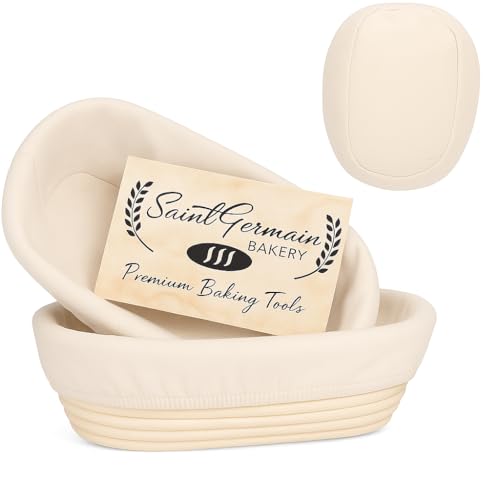
Flouring a banneton properly is one of those banneton basics tips that saves a lot of frustration later. Too little flour and the dough sticks.
Too much and it clumps up in weird patches.
Rice flour works better than regular flour since it resists moisture longer. Dust it into every groove with a small brush, then tap out the extra before the dough goes in.
- The flour trick that prevents sticking
- Rice flour resists moisture longer
- Brush into every groove
- Tap out extra before use
Banneton Care And Storage

Last but definitely not least, taking care of the banneton itself keeps it usable for years. Never wash it with soap and water, since that strips the seasoning that keeps dough from sticking.
Just knock out the excess flour and let it air dry completely before storing. Keep it somewhere dry, because any leftover moisture invites mold fast.
- The habit that makes it last years
- No soap, ever
- Air dry fully before storage
- Keep in a dry cupboard